

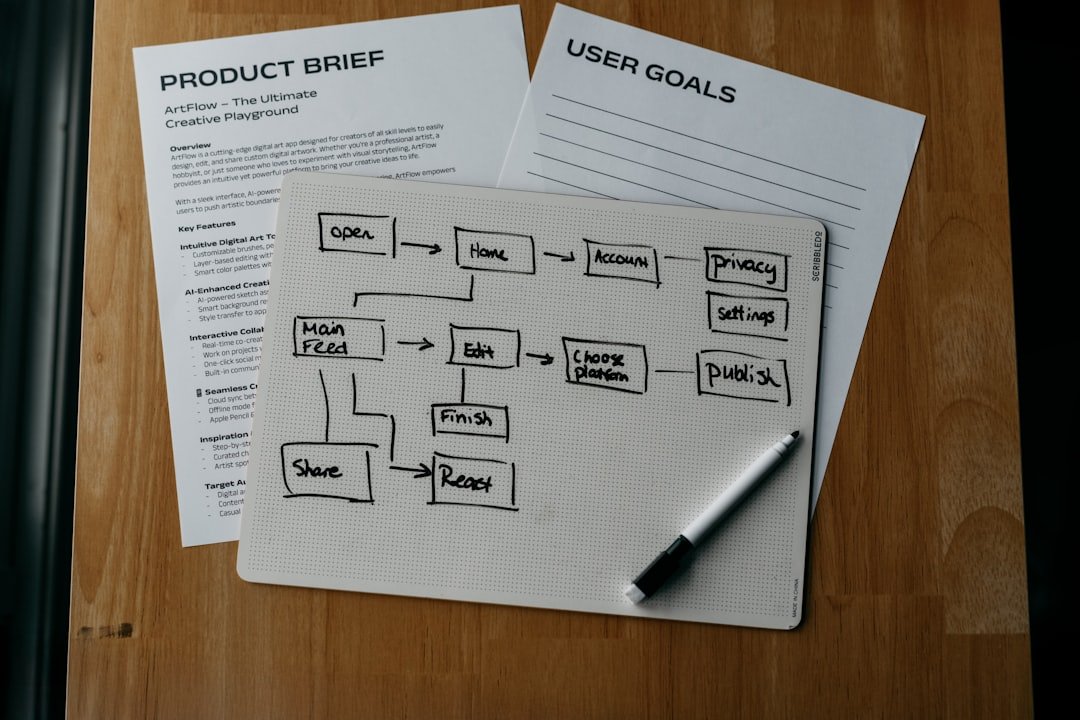
A small business marketing funnel gives potential customers a clear journey from first discovering your company to becoming a paying customer—and eventually a loyal advocate. Without that journey, marketing often becomes a collection of disconnected activities: occasional social posts, an email campaign, a website and perhaps a few advertisements that do not work together.
Thank you for reading this post, don't forget to subscribe!The purpose of a funnel is not to manipulate people or pressure them into buying. It is to understand what information and reassurance someone needs at each stage of a decision. When every stage supports the next, your marketing becomes easier to measure and your prospects experience less confusion.
This guide explains how to build a practical funnel that a small team can manage without expensive software or a complicated automation system.
What Is a Small Business Marketing Funnel?
A marketing funnel is a structured representation of the customer journey. At the top, a larger group of people becomes aware of your business. As they learn more, some recognise that your offer may solve their problem. A smaller number compares options, asks questions and eventually buys.
The traditional funnel is often described as awareness, consideration and conversion. For a modern small business, it is more useful to include the stages after purchase because repeat business and referrals can be more efficient than continually acquiring new customers.
A practical funnel therefore includes:
- Awareness
- Interest
- Lead capture
- Trust building
- Evaluation
- Conversion
- Retention and referral
Customers will not always follow these stages in a perfect order. Someone may discover you through a recommendation and be ready to buy immediately. Another person may read several articles over three months before making contact. The funnel is a planning tool, not a rigid rule.
Step 1: Define One Audience and One Problem
The strongest funnel begins with a specific audience. If your message tries to address everyone, it becomes difficult for the right customer to recognise that your offer is relevant.
Write a clear statement containing three elements:
- Who the customer is
- What important problem they face
- What result they want
For example: “We help local service businesses replace outdated websites with professional sites that build trust and generate qualified enquiries.” This is stronger than “We provide web design for everyone” because it identifies both the customer and the desired outcome.
Use customer conversations, sales questions, support emails and search data to understand the language people use. Avoid inventing a complicated persona filled with details that do not influence the buying decision.
Step 2: Create Awareness in the Right Places
Awareness is not about appearing everywhere. It is about being visible where suitable customers already look for information or recommendations.
Useful awareness channels may include:
- Search-optimised articles that answer real questions
- LinkedIn posts for professional audiences
- Google Business Profile for local services
- Relevant online communities
- Partnerships with complementary businesses
- Short educational videos
- Carefully targeted advertising
Choose one or two primary channels and use them consistently before expanding. A small business rarely needs five active social platforms. Concentrated quality usually creates more trust than a weak presence everywhere.
Your awareness content should solve a small part of the customer’s problem. It should be useful even when the reader is not ready to buy. This demonstrates expertise and gives people a reason to remember the brand.
Step 3: Give Interested Visitors a Clear Next Step
Attention disappears quickly when the next action is unclear. Each article, social post and landing page should guide the visitor toward one appropriate next step.
Depending on the business, that step could be:
- Read a related guide
- Download a checklist
- Join an email list
- Request an assessment
- View a relevant case study
- Book a consultation
- Ask a specific question
Do not place several competing calls to action beside each other. A visitor who must choose between subscribing, calling, downloading, buying and following four social channels may choose nothing.
The correct action should match the visitor’s stage. A person reading a beginner’s guide may prefer a checklist, while someone studying a service comparison may be ready for a consultation.
Step 4: Capture Leads by Offering Genuine Value
Many visitors will not buy during their first session. Lead capture creates permission to continue the relationship.
A useful lead magnet solves one narrow problem quickly. Examples include a checklist, template, calculator, short email course, buying guide or assessment. It should connect directly to the service or product you eventually want to sell.
Avoid offering a general e-book that attracts people with no intention of becoming customers. A web design company, for example, may gain better leads from a “Homepage Trust Checklist” than from a broad “100 Social Media Tips” download.
Ask only for information you genuinely need. An email address and first name are often enough. Explain what the subscriber will receive and how frequently you will contact them.
Step 5: Build Trust Before Asking for the Sale
Trust-building content helps a prospect understand your method, evidence and suitability. It reduces perceived risk.
Strong trust assets include:
- Case studies that explain the problem, process and result
- Testimonials connected to specific outcomes
- Transparent service descriptions
- Answers to common objections
- Examples of previous work
- Clear pricing guidance or package structure
- Helpful email sequences
- A professional About page
This stage should answer the question: “Why should I believe this business can help me?”
Your website plays a central role. The guide to building customer trust online explains how consistent branding, clear contact information, proof and transparent policies support credibility.
Step 6: Make Evaluation and Conversion Simple
When a prospect is ready to evaluate your offer, unnecessary friction can still prevent the sale. Review the complete conversion experience from the customer’s perspective.
Check whether visitors can quickly understand:
- What the offer includes
- Who it is designed for
- What result it supports
- What it costs or how pricing is determined
- What happens after they enquire or purchase
- What evidence supports the claims
- How to contact the business
Forms should request only necessary information. Buttons should use specific language such as “Request a Website Review” instead of a vague “Submit.” Confirmation messages should explain the next step and expected response time.
Use the website conversion optimisation guide to improve pages that receive traffic but do not generate enough enquiries.
Step 7: Continue the Funnel After Purchase
The customer journey should not end at payment. A thoughtful onboarding and follow-up process improves the result, reduces uncertainty and creates opportunities for repeat business.
After purchase:
- Confirm the order or agreement immediately.
- Explain the delivery process and responsibilities.
- Provide useful progress updates.
- Check satisfaction after delivery.
- Offer relevant ongoing support.
- Request a review or referral at the right moment.
The customer retention playbook and referral marketing guide show how a completed sale can become the beginning of a longer relationship.
Choose Metrics for Every Funnel Stage
Do not judge the entire funnel by website traffic alone. Each stage requires a useful measurement.
Track:
- Awareness: impressions, search visibility and relevant reach
- Interest: engaged visits, article depth and return visitors
- Lead capture: conversion rate and lead quality
- Trust building: email engagement, case-study views and replies
- Evaluation: qualified enquiries, proposals and sales conversations
- Conversion: sales rate, customer acquisition cost and revenue
- Retention: repeat purchases, renewals, referrals and customer value
Begin with a simple monthly spreadsheet or dashboard. The purpose is to identify where suitable prospects stop progressing—not to collect every possible metric.
Common Funnel Mistakes
Attracting the Wrong Audience
High traffic is not valuable when visitors have no need, budget or authority to buy. Align content topics with the problems your offer solves.
Asking for Too Much Too Soon
A first-time visitor may not be ready to schedule a sales call. Offer a lower-commitment step that continues the relationship.
Creating Content Without a Destination
Every content asset should connect to a related page, lead magnet, service or next piece of information.
Automating a Weak Process
Automation increases the speed of a process; it does not make an unclear message persuasive. Confirm that customers respond to the journey manually before adding complex tools.
Ignoring Existing Customers
A funnel focused entirely on acquisition wastes the trust already earned. Retention, expansion and referrals belong in the same system.
A 30-Day Implementation Plan
Week 1: Define the audience, problem, offer and primary channel. Map the seven stages on one page.
Week 2: Improve one high-value landing page and create one relevant lead magnet or consultation offer.
Week 3: Write a short follow-up sequence that educates, answers objections and guides the prospect toward the next decision.
Week 4: Connect retention and referral actions, then record baseline metrics for every stage.
Final Thoughts
A small business marketing funnel should make the buying journey clearer, not more complicated. Start with one audience, one important problem and one valuable offer. Create helpful awareness content, provide an appropriate next step, develop trust with evidence and remove friction from the purchase.
Once the basic journey works, improve the weakest stage before adding more channels or software. A simple connected system will usually outperform a large collection of disconnected marketing activities.