

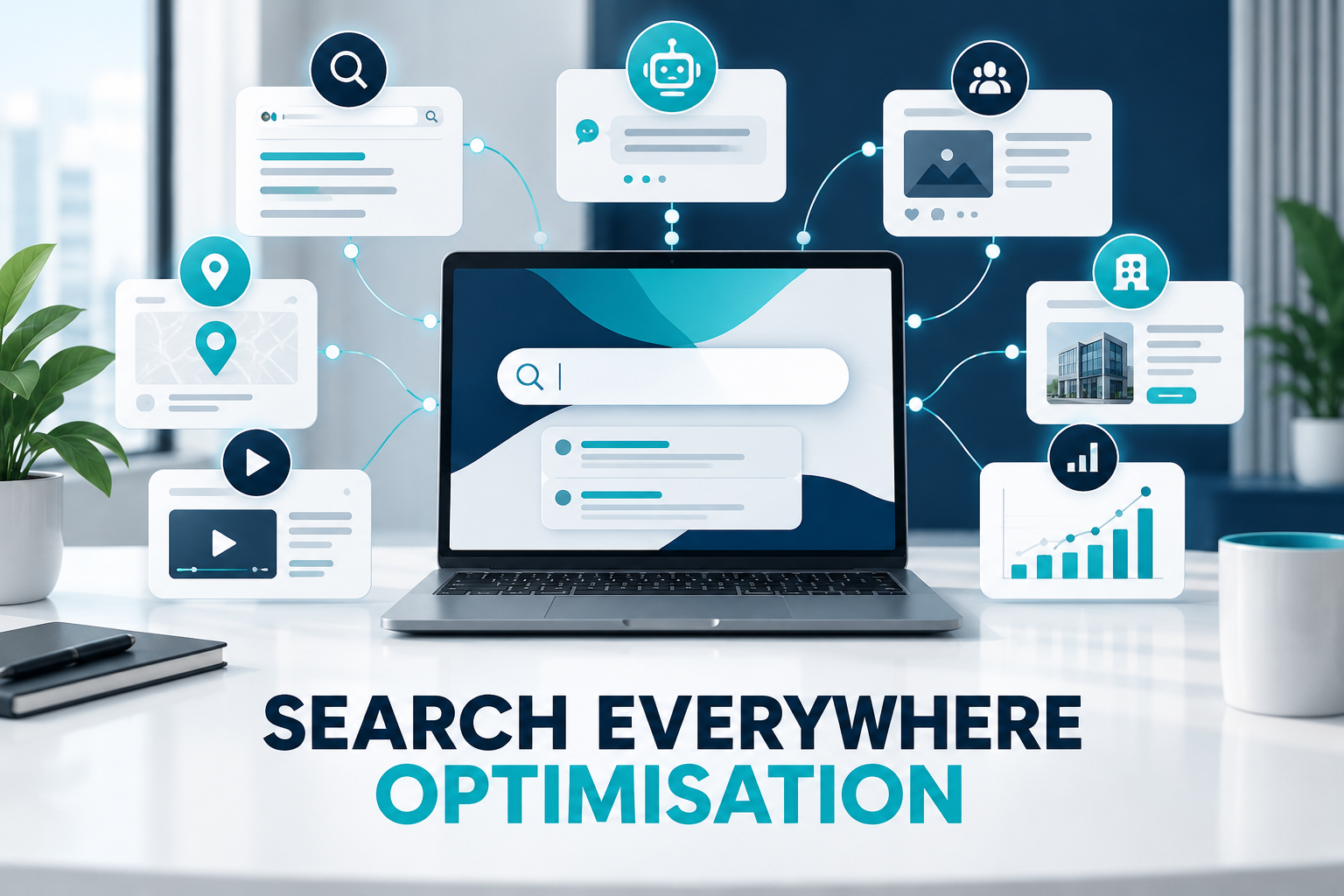
Search no longer happens in one place.
Thank you for reading this post, don't forget to subscribe!A potential customer might begin with Google, compare ideas through an AI assistant, watch a demonstration on a social platform, check reviews on a map listing and finally visit the company’s website. Every step influences the decision.
This change does not make traditional SEO irrelevant. It expands the job. Search everywhere optimisation is the practice of making a business understandable, trustworthy and discoverable across the platforms customers use to research problems and solutions.
For small businesses, the opportunity is significant. You do not need to dominate every platform. You need a consistent presence in the few places that matter most to your audience.
What Is Search Everywhere Optimisation?
Search everywhere optimisation combines website SEO with visibility across AI tools, social search, video platforms, business directories, maps and professional communities.
The goal is not to copy the same promotional message everywhere. It is to create connected information that helps people recognise the business, understand its expertise and move confidently toward the next step.
A strong strategy answers four questions:
- Where does the audience search?
- What questions do they ask at each stage?
- What format helps them most?
- How can every platform lead to a clear and trustworthy destination?
Why Customer Discovery Has Become Fragmented
Different platforms solve different parts of the buying journey.
Google is often used for direct questions, comparisons and local intent. Social platforms can reveal examples, opinions and demonstrations. AI tools help users organise information and explore options. Maps and review platforms provide location, reputation and practical details. The business website remains the place where the company controls its message, evidence and conversion experience.
If these sources disagree, confidence falls. An outdated service description on one profile or conflicting contact details can make a legitimate business appear unreliable.
Consistency is therefore not merely a branding preference. It supports discoverability and trust.
Begin with One Clear Business Identity
Before creating more content, establish a consistent foundation across the web:
- Business name
- Short description
- Services or product categories
- Website address
- Contact information
- Location or service area
- Logo and visual identity
- Founder or author information
Use natural wording rather than forcing identical keyword-heavy descriptions onto every profile. The facts should remain consistent while the presentation fits each platform.
For Sahan Digital Marketing, for example, the central topic should remain practical marketing, business and technology guidance for small businesses. A clear editorial purpose helps both readers and discovery systems understand what the site represents.
Build the Website as the Source of Truth
Social profiles can change, algorithms can reduce reach and third-party platforms can close accounts. Your website should remain the authoritative home for complete information.
Each important topic needs a useful page with:
- A descriptive title and main heading
- A direct answer near the beginning
- Logical subheadings
- Original examples or analysis
- Clear authorship
- Relevant internal links
- Accurate sources where facts require evidence
- A useful next step
Avoid creating several weak pages that target nearly identical keywords. One comprehensive guide supported by more specific articles usually gives readers a clearer path.
Optimise for Questions, Not Only Keywords
People often search in complete questions, especially when using voice or conversational AI.
Instead of targeting only “local SEO,” build content around practical needs:
- How can a new business appear in local search?
- Why is my business visible on maps but not Google Search?
- What information should a service business add to its profile?
- How can customer reviews improve local trust?
Use the main question as a heading, answer it clearly and then explain the details. This structure is useful for readers and makes the page easier for different discovery systems to interpret.
Turn One Strong Article into Multiple Discovery Assets
A single quality article can support several platforms without becoming repetitive.
For example, an article about customer retention could become:
- A LinkedIn post explaining one common retention mistake
- A short video showing a three-step follow-up system
- A carousel summarising five practical actions
- A concise answer in a relevant business community
- An email checklist for subscribers
Each asset should be useful by itself. The website link can offer the complete guide, but the social post should not feel like an empty advertisement.
This approach helps a small team maintain quality while increasing the number of places where its expertise can be discovered.
Strengthen Signals That Support AI Discovery
There is no special trick that guarantees inclusion in an AI-generated response. However, content becomes easier to understand and trust when it contains clear facts, focused explanations, visible authorship and evidence.
Helpful practices include:
- State who created or reviewed the content.
- Explain first-hand experience when relevant.
- Cite original or authoritative sources.
- Keep names, services and contact details consistent.
- Use descriptive headings and concise definitions.
- Update outdated claims when the underlying facts change.
- Avoid publishing generic summaries that add no original value.
The objective is not to write for machines. It is to publish information that can be confidently interpreted and verified.
Use Social Search Intentionally
Users increasingly search social platforms for demonstrations, recommendations and real experiences. Captions, spoken words, on-screen text and profile information all help people understand what a post is about.
For each social post:
- Open with the problem or result.
- Name the topic naturally in the first lines.
- Demonstrate one useful idea.
- Use a descriptive image or video.
- Add a small number of relevant hashtags.
- Direct interested readers to the most relevant page, not always the homepage.
Comments also contribute to discovery. Answer genuine questions with useful detail rather than replying only with promotional links.
Do Not Ignore Local Discovery
Businesses serving a location should treat maps, business profiles and local directories as part of the same system.
Maintain accurate opening hours, service categories, photos and contact information. Request honest reviews at appropriate moments and respond professionally. Create website pages that clearly explain the areas served, but avoid producing dozens of nearly identical location pages.
Local visibility is strongest when profile information, website content and customer evidence support the same message.
Measure Discovery Across the Journey
Organic visibility should not be judged by one number.
Monitor:
- Search impressions and clicks
- Queries bringing visitors to the website
- Referral traffic from social platforms and directories
- Branded searches for the company name
- Engagement with educational social content
- Enquiries, subscriptions or sales connected to organic visits
- Pages that assist a conversion even when they are not the final page visited
Use these signals to decide where to invest. If LinkedIn brings engaged business readers, create more professional insight there. If a guide receives Google impressions but few clicks, improve its title and description. If visitors arrive but leave without taking action, improve the page experience and next step.
A Practical 90-Day Plan
During the first month, correct inconsistent business information, improve the most important website pages and identify the audience’s recurring questions.
In month two, publish a focused topic cluster and repurpose each article into social and video formats. Link related pages together so readers can continue their research.
In month three, study search and referral data. Refresh content gaining impressions, expand the platforms producing meaningful engagement and stop spending time on channels that do not reach the intended audience.
The aim is not to be everywhere. It is to build a connected presence wherever the right customers make decisions.
Final Thoughts
Search everywhere optimisation reflects a simple reality: discovery is now a journey across platforms.
Small businesses can respond by creating one clear identity, publishing genuinely helpful website content and adapting that expertise into the formats customers prefer. Google SEO remains essential, but it works best when supported by credible social profiles, local information, useful media and consistent business facts.
Visibility grows when every channel reinforces the same promise. Build the website as the source of truth, choose platforms intentionally and give people valuable reasons to remember—and return to—the business.