

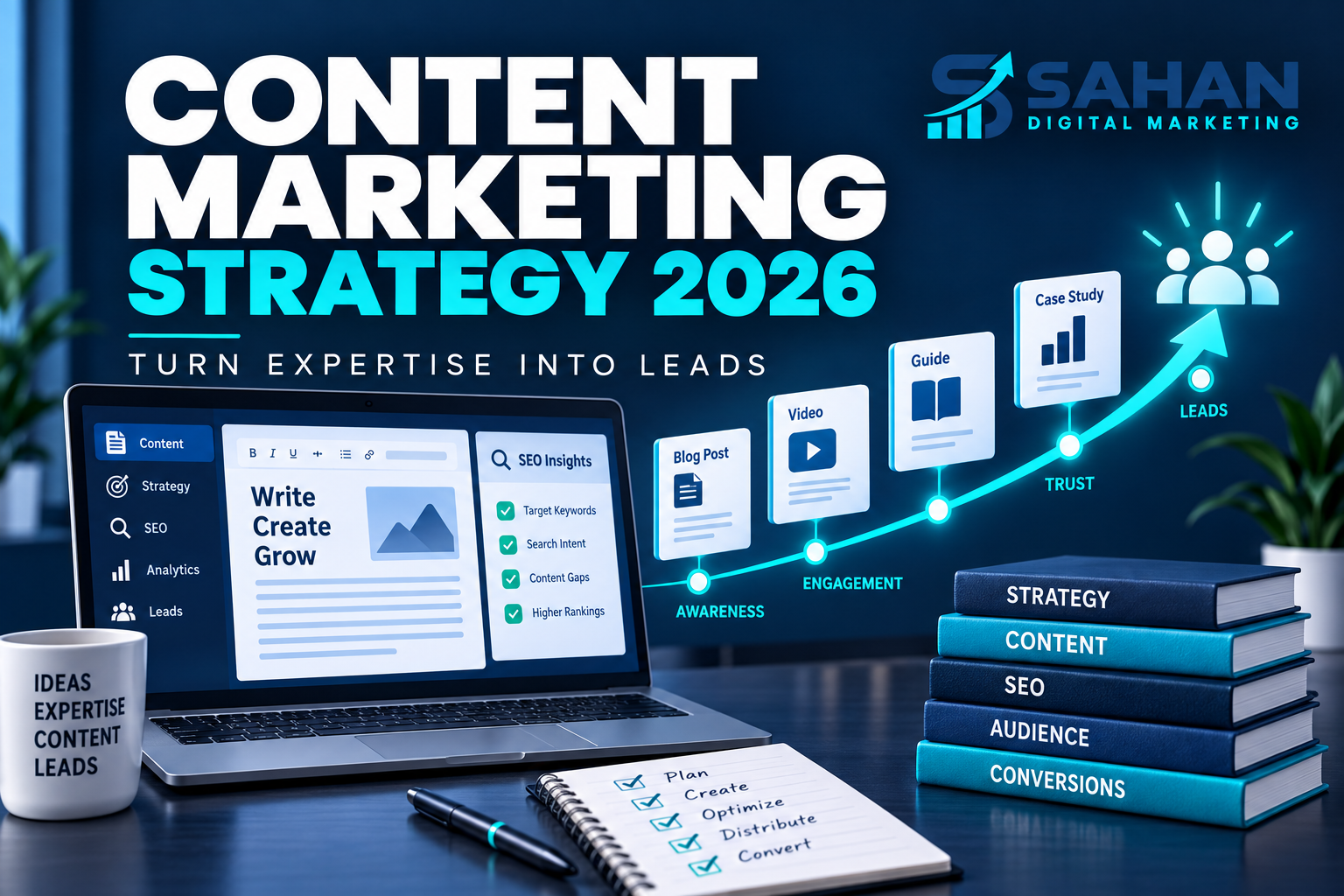
A strong content marketing strategy does more than keep a website active. It helps the right customers discover your expertise, understand their problem, trust your business, and take the next step. In 2026, small businesses need this focused approach more than a high volume of disconnected posts.
Thank you for reading this post, don't forget to subscribe!This guide shows how to build a practical content system around customer questions, search intent, useful expertise, and clear conversion paths—without producing content simply to satisfy an algorithm.
Why People-First Content Wins in 2026
Google says its ranking systems are designed to prioritize helpful, reliable information created to benefit people rather than content produced mainly to manipulate rankings. Its guidance asks whether a page offers original value, demonstrates first-hand expertise, satisfies the reader, and makes the author and purpose clear. Read Google’s official people-first content guidance.
For a small business, that means your advantage is not publishing more than major competitors. Your advantage is knowing your customers closely. Real sales conversations, common objections, project experience, local knowledge, and practical examples can make your content more useful than generic articles.
Start With One Audience and One Business Goal
A content plan becomes weak when it tries to speak to everyone. Define the customer you most want to attract, the problem you solve for them, and the business outcome you want your content to support. That outcome might be contact-form submissions, consultation bookings, product sales, newsletter sign-ups, or qualified phone calls.
Example: A local web designer should not begin with “write about websites.” A sharper direction is “help small service businesses understand how a professional website can build trust and generate enquiries.” This creates a clear audience, promise, and path to conversion.
Build Content Around the Customer Journey
Awareness content helps people recognise a problem. Topics might include signs that a website needs redesigning, reasons local visibility is declining, or common branding mistakes.
Consideration content helps readers compare approaches. Useful formats include step-by-step guides, service comparisons, cost explanations, checklists, and case studies.
Decision content gives prospects confidence to act. Service pages, portfolios, testimonials, process explanations, frequently asked questions, and transparent next steps belong here.
The strongest strategy connects these stages. An educational article should link to a relevant service or case study. A service page should answer objections and provide a clear call to action.
Choose Topics From Evidence, Not Guesswork
Begin with customer emails, sales calls, comments, support questions, Search Console queries, and competitor gaps. Record the exact language customers use. Their words often reveal both the topic and the search intent.
Prioritise subjects using three questions: Is this genuinely useful to the intended audience? Can your business add experience or insight? Can the article naturally support a relevant product, service, or next step? A topic that satisfies all three is usually worth producing.
Use a Simple, Repeatable Article Structure
Open by confirming the reader’s problem and explaining what the article will help them achieve. Organise the main body with descriptive headings. Give concrete steps, examples, limitations, and decisions—not vague encouragement. End with a concise summary and one relevant call to action.
Your title should describe the real benefit without exaggeration. Your introduction should answer the central question quickly. Internal links should guide readers to useful supporting material, such as our Local SEO guide and Google Analytics and Search Console guide.
Turn One Strong Idea Into Several Assets
A useful article can become an email, a short video, a carousel, several social posts, a sales talking point, and an updated FAQ. Repurposing works when each format is adapted to its audience; simply pasting the same text everywhere rarely performs well.
This approach also protects quality. Instead of rushing to produce five shallow ideas, develop one valuable idea and distribute it intelligently across the channels your customers already use.
Measure Business Value, Not Just Traffic
Track impressions and clicks in Search Console, then use Google Analytics to evaluate engaged sessions, landing-page performance, and key events. A smaller article that generates qualified enquiries can be more valuable than a high-traffic post with no commercial relevance.
Review each important article after enough data has accumulated. Improve unclear titles, outdated examples, weak introductions, missing internal links, and calls to action that do not match the reader’s stage.
A Practical 30-Day Content Plan
Week 1: define the audience, goal, customer questions, and four topic opportunities. Week 2: create one substantial article and its supporting visuals. Week 3: repurpose it for email and social platforms. Week 4: review early performance, collect feedback, and prepare the next article based on what you learned.
Final Thoughts
The best content marketing strategy in 2026 is focused, helpful, and connected to a real business goal. Publish fewer pieces if necessary, but make each one clearer, more original, and more useful. When your expertise answers the right question at the right moment, content becomes a long-term business asset.
Need a practical digital marketing plan for your business? Contact Sahan Digital Marketing for tailored support.