

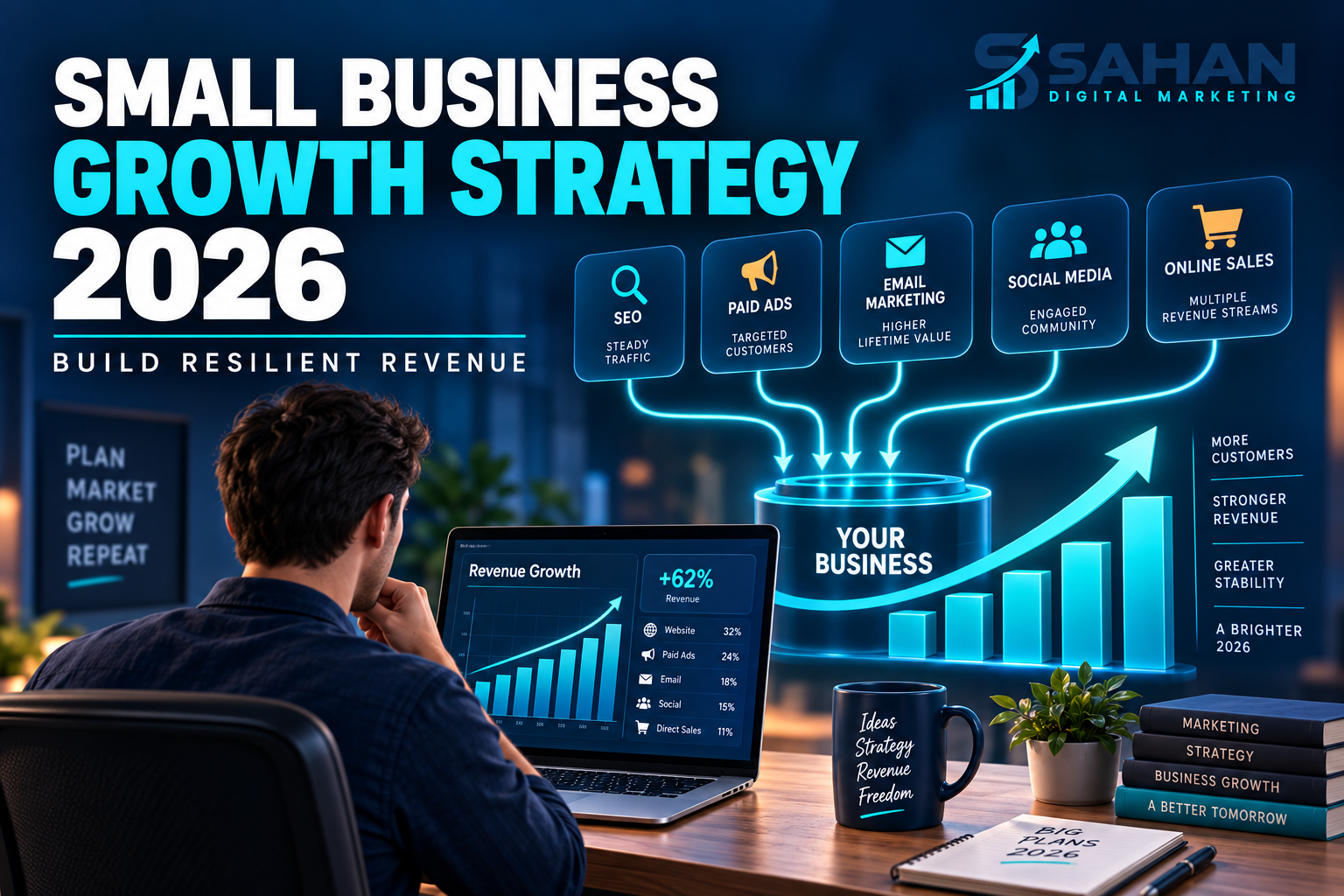
A small business growth strategy should produce progress without making the company fragile. Growth that depends on one customer, one platform, one product, or constant discounting can disappear quickly. A resilient revenue system spreads risk, improves consistency, and gives the owner better information for making decisions.
Thank you for reading this post, don't forget to subscribe!This 2026 guide explains how small businesses can connect positioning, offers, lead generation, sales, customer retention, cash awareness, and measurement into one manageable system.
Growth Begins With a Clear Business Model
Before adding new tools or campaigns, clarify who you serve, which urgent problem you solve, how you deliver the result, and why customers should choose you. If this foundation is unclear, more marketing usually creates more confusion rather than more revenue.
The U.S. Small Business Administration describes a business plan as a roadmap for structuring, running, and growing a company. A plan does not need to be dozens of pages. A concise working document covering customers, value proposition, channels, costs, pricing, and key goals can guide weekly decisions. See the SBA’s official business-planning guidance.
Build a Strong Core Offer
A strong offer makes the customer, outcome, scope, timeframe, process, and next step easy to understand. Avoid describing only the features of your work. Explain the business result: stronger credibility, faster delivery, fewer mistakes, more qualified enquiries, or easier operations.
Create one dependable core offer before expanding into many packages. Once it sells consistently, add a smaller entry offer or a premium option only when each has a clear role. Too many choices can slow decisions and create operational complexity.
Develop More Than One Lead Source
Relying completely on social media, paid advertising, referrals, or marketplace platforms creates unnecessary risk. A healthier system combines channels that behave differently.
Owned channels include your website, email list, customer database, and original content. Earned channels include referrals, reviews, partnerships, media mentions, and organic search. Paid channels include search ads, social advertising, sponsorships, and promoted listings.
Begin with two lead sources you can manage well. For many small businesses, a professional website plus referrals or local SEO is a realistic foundation. Our digital marketing guide for small businesses explains how the major channels work together.
Create a Simple Sales Process
Every enquiry should move through a consistent sequence: response, qualification, discovery, recommendation, proposal, decision, and follow-up. Define the information you need at each stage and the time limit for responding.
Use templates for routine emails and proposals, but personalise the recommendation. Track why prospects accept, delay, or decline. These patterns can reveal pricing problems, unclear positioning, weak trust signals, or leads that were never a good fit.
Protect Cash Flow While You Grow
Revenue and cash are not the same. A business can appear busy while struggling to pay expenses because invoices arrive late, margins are too thin, or growth requires upfront spending.
Review cash coming in, committed costs, taxes, unpaid invoices, and expected expenses regularly. Use deposits or staged payments when appropriate, document payment terms clearly, and avoid expanding fixed costs based on one unusually strong month. For country-specific accounting and tax decisions, consult a qualified local professional.
Make Customer Retention Part of the Strategy
Growth becomes more efficient when satisfied customers return, renew, upgrade, or refer others. Create a structured follow-up after delivery. Ask whether the customer achieved the intended result, resolve problems early, request a review at the right moment, and identify the next service that would genuinely help.
Do not treat retention as repeated selling. It begins with reliable delivery, clear communication, and an experience customers want to recommend.
Use Systems Before Adding More People
Document recurring tasks such as onboarding, project setup, approvals, quality checks, delivery, invoicing, and follow-up. A short checklist can prevent errors and make future delegation easier.
Automation should remove repetitive administration while keeping human oversight for decisions, relationships, and quality. Use technology to create capacity—not to send impersonal communication that damages trust.
Track a Small Set of Useful Numbers
Monitor qualified leads, conversion rate, average sale value, gross margin, repeat purchases, outstanding invoices, and cash runway. Marketing metrics such as traffic and reach are useful only when connected to the commercial journey.
Review the numbers monthly and ask what changed, why it changed, and what action is justified. Avoid reacting to every short-term fluctuation.
Your 90-Day Growth Framework
Days 1–30: clarify the core customer, offer, pricing, costs, and baseline metrics. Days 31–60: improve the website, lead capture, follow-up, and one primary acquisition channel. Days 61–90: strengthen delivery, retention, referrals, and the second lead source.
Final Thoughts
A resilient small business growth strategy is not built from one dramatic campaign. It comes from a clear offer, diversified lead generation, disciplined sales, reliable delivery, customer retention, and cash awareness. Improve the weakest part of that system first, measure the result, and expand only when the foundation can support it.
For support building your online growth system, contact Sahan Digital Marketing.